
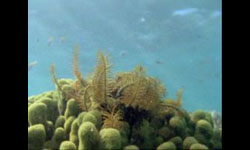
Bright blue starfish, crimson feather stars, shell-less snails in designs as extravagant as any Paris fashion show, shrimps of every colour, others that are transparent - just a sample of the animal wonders to be found in a small area of the Great Barrier Reef.
- TV-Recordings
- Natural World
- TV-Recordings
- No subtitles
- 55
Bright blue starfish, crimson feather stars, shell-less snails in designs as extravagant as any Paris fashion show, shrimps of every colour, others that are transparent - just a sample of the animal wonders to be found in a small area of the Great Barrier Reef.
For most of Earth's history there was no life on land. But over 400 million years ago some tiny plants began an invasion from the water, closely followed by the first animals - the ancestors of millipedes and insects.
- TV-Recordings
- Natural World
- TV-Recordings
- No subtitles
- 55
For most of Earth's history there was no life on land. But over 400 million years ago some tiny plants began an invasion from the water, closely followed by the first animals - the ancestors of millipedes and insects.
The number of insect species runs into millions; a single termite colony may consist of a million individuals; a locust swarm even a million million.
- TV-Recordings
- Natural World
- TV-Recordings
- No subtitles
- 55
The number of insect species runs into millions; a single termite colony may consist of a million individuals; a locust swarm even a million million.
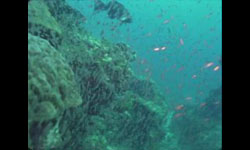
Fish occur in populations of billions and there are over 30,000 species, more than in any other group of backboned animals. The development of the backbone was a crucial advance in evolution -and it probably came from a most unlikely source, a little jelly-like creature called a sea squirt.
- TV-Recordings
- Natural World
- TV-Recordings
- No subtitles
- 55
Fish occur in populations of billions and there are over 30,000 species, more than in any other group of backboned animals. The development of the backbone was a crucial advance in evolution -and it probably came from a most unlikely source, a little jelly-like creature called a sea squirt.

Some 350 million years ago, evolution reached one of its most crucial stages when fish crawled from water onto the land and became amphibians. Today, newts, salamanders, toads and frogs still survive in great quantities, and there is even one species of frog where the male gives birth from its mouth! Presented by David Attenborough
- TV-Recordings
- Natural World
- TV-Recordings
- No subtitles
- 55
Some 350 million years ago, evolution reached one of its most crucial stages when fish crawled from water onto the land and became amphibians. Today, newts, salamanders, toads and frogs still survive in great quantities, and there is even one species of frog where the male gives birth from its mouth! Presented by David Attenborough

David Attenborough looks at the history of reptiles, the first back-boned creatures to solve the problems of living high and dry on the land. Their waterproofed skin and sealed eggs enabled the mighty reptiles to rule the world.
- TV-Recordings
- Natural World
- TV-Recordings
- No subtitles
- 55
David Attenborough looks at the history of reptiles, the first back-boned creatures to solve the problems of living high and dry on the land. Their waterproofed skin and sealed eggs enabled the mighty reptiles to rule the world.
The story of life, from the first primitive cells to the plants and animals that now live around us. David Attenborough examines the uses and advantages of birds' unique possession - the feather. Man has yet to invent anything that, weight for weight, is as strong as the feather. Feathers are insulators, they provide the surface of the most perfect aerofoils known - bird's wings
- TV-Recordings
- Natural World
- TV-Recordings
- No subtitles
- 55
The story of life, from the first primitive cells to the plants and animals that now live around us. David Attenborough examines the uses and advantages of birds' unique possession - the feather. Man has yet to invent anything that, weight for weight, is as strong as the feather. Feathers are insulators, they provide the surface of the most perfect aerofoils known - bird's wings
Mammals have proved to be one of the most adaptable products of evolution. David Attenborough looks at their evolution from reptiles 200 million years ago. This remarkable transition involved the development of mechanisms for regulating body temperature, for allowing the young to develop in the womb and for suckling newborns.
- TV-Recordings
- Natural World
- TV-Recordings
- No subtitles
- 55
Mammals have proved to be one of the most adaptable products of evolution. David Attenborough looks at their evolution from reptiles 200 million years ago. This remarkable transition involved the development of mechanisms for regulating body temperature, for allowing the young to develop in the womb and for suckling newborns.
David Attenborough brings us the universal story that unites each of us with every animal on the planet, the story of the greatest of all adventures - the journey through life. In the first episode, animals overcome their first great hurdle - surviving infancy.
- TV-Recordings
- Natural World
- English subtitles
- 60
David Attenborough brings us the universal story that unites each of us with every animal on the planet, the story of the greatest of all adventures - the journey through life. In the first episode, animals overcome their first great hurdle - surviving infancy.
In the journey towards adulthood, a moment comes for all animals when they must strike out on their own. With their parents absent they must learn to survive in a dangerous world. At this stage of life every small success may mean the difference between life and death.
- TV-Recordings
- Natural World
- English subtitles
- 60
In the journey towards adulthood, a moment comes for all animals when they must strike out on their own. With their parents absent they must learn to survive in a dangerous world. At this stage of life every small success may mean the difference between life and death.
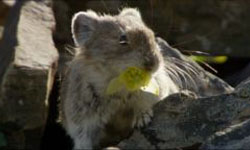
Animals must find somewhere to live - a place that provides the necessities of life, shelter from the elements and a refuge from enemies.
- TV-Recordings
- Natural World
- English subtitles
- 60
Animals must find somewhere to live - a place that provides the necessities of life, shelter from the elements and a refuge from enemies.

Animals must try to gain a position of power in their worlds. The most powerful have best access to food and water, and they are also the most attractive to the opposite sex.
- TV-Recordings
- Natural World
- English subtitles
- 60
Animals must try to gain a position of power in their worlds. The most powerful have best access to food and water, and they are also the most attractive to the opposite sex.
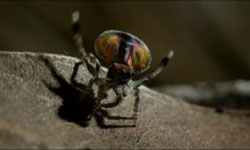
David Attenborough explores the courtship displays of flame bowerbirds and pufferfish.
- TV-Recordings
- Natural World
- English subtitles
- 60
David Attenborough explores the courtship displays of flame bowerbirds and pufferfish.
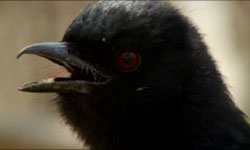
In this final episode, animals attempt to rear their offspring.
- TV-Recordings
- Natural World
- English subtitles
- 60
In this final episode, animals attempt to rear their offspring.
-
Life Story Series 1
-
BBC
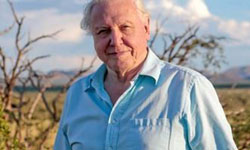
Life Story takes us on the greatest of all adventures - the journey through life.
- TV-Recordings
- English subtitles
- 360
Life Story takes us on the greatest of all adventures - the journey through life.
-
Madagascar
-
BBC
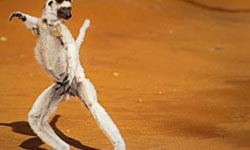
Over 80 per cent of Madagascar's animals and plants are found nowhere else on Earth. Discover what made Madagascar so different from the rest of the world, and how evolution ran wild here.
- TV-Recordings
- No subtitles
- 180
Over 80 per cent of Madagascar's animals and plants are found nowhere else on Earth. Discover what made Madagascar so different from the rest of the world, and how evolution ran wild here.

Revealing the wildlife at home in Madagascar\'s most bizarre and dramatic places.
- TV-Recordings
- Biology
- TV-Recordings
- No subtitles
- 60
Revealing the wildlife at home in Madagascar\'s most bizarre and dramatic places.
Follows the animals\' fortunes through the wet and dry seasons in this island of extremes.
- TV-Recordings
- Biology
- TV-Recordings
- No subtitles
- 60
Follows the animals\' fortunes through the wet and dry seasons in this island of extremes.
-
Madagascar - Lost Worlds
-
BBC 1
A look at the eastern coast of the island and its unique wildlife.
- TV-Recordings
- Biology
- TV-Recordings
- No subtitles
- 60
A look at the eastern coast of the island and its unique wildlife.
-
Monkey Planet
-
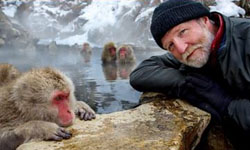
Meet the primates - Your animal family as you've never seen it before.
- TV-Recordings
- English subtitles
- 180
Meet the primates - Your animal family as you've never seen it before.

Our primate family is incredibly varied and surprising. From the ninja tarsier, a spring-loaded ambush predator the size of a tennis ball, to the magnificent herds of geladas in the mountains of Ethiopia, primates have adapted to environments across the planet.
- TV-Recordings
- Natural World
- English subtitles
- 60
Our primate family is incredibly varied and surprising. From the ninja tarsier, a spring-loaded ambush predator the size of a tennis ball, to the magnificent herds of geladas in the mountains of Ethiopia, primates have adapted to environments across the planet.

The key to primate success is that, like us, most species live in close-knit family groups. How do you choose your friends, learn from those around you and know who to trust? We explore the complex world of primate social lifestyles
- TV-Recordings
- Natural World
- English subtitles
- 60
The key to primate success is that, like us, most species live in close-knit family groups. How do you choose your friends, learn from those around you and know who to trust? We explore the complex world of primate social lifestyles

There\'s one thing that sets us primates apart from most other families on the planet, and that\'s a flexible mind. Our primate cousins are much smarter than you might imagine. Just like us they use tools, solve problems, and even have emotions. Monkey Planet discovers how these animals are individuals with a sense of self and why brainpower is essential to primate survival.
- TV-Recordings
- Natural World
- English subtitles
- 60
There\'s one thing that sets us primates apart from most other families on the planet, and that\'s a flexible mind. Our primate cousins are much smarter than you might imagine. Just like us they use tools, solve problems, and even have emotions. Monkey Planet discovers how these animals are individuals with a sense of self and why brainpower is essential to primate survival.
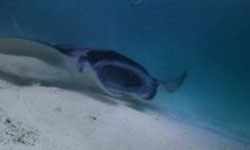
Manta rays are one of the most intelligent creatures in the ocean and, at up to seven metres long, one of the largest. Yet despite their size and curious nature, almost nothing is known about their lives.
- TV-Recordings
- Biology
- TV-Recordings
- No subtitles
- 58
Manta rays are one of the most intelligent creatures in the ocean and, at up to seven metres long, one of the largest. Yet despite their size and curious nature, almost nothing is known about their lives.
Wildlife documentary. In the forests of northern Minnesota, biologist Lynn Rogers uses food to gain the trust of wild black bears, a controversial technique developed over his own forty-year journey from fear to fascination. Following the fortunes of mother bear June and her three cubs over a year, the film reveals an intimate portrait of the lives of black bears.
- TV-Recordings
- Biology
- TV-Recordings
- No subtitles
- 58
Wildlife documentary. In the forests of northern Minnesota, biologist Lynn Rogers uses food to gain the trust of wild black bears, a controversial technique developed over his own forty-year journey from fear to fascination. Following the fortunes of mother bear June and her three cubs over a year, the film reveals an intimate portrait of the lives of black bears.
Wildlife film maker Rebecca Hosking investigates how to transform her family\'s farm in Devon into a low energy farm for the future, and discovers that nature holds the key.
- TV-Recordings
- Biology
- Environmental Studies
- TV-Recordings
- No subtitles
- 50
Wildlife film maker Rebecca Hosking investigates how to transform her family\'s farm in Devon into a low energy farm for the future, and discovers that nature holds the key.
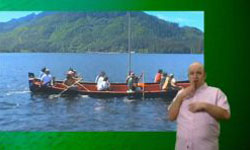
This is the emotional story of one young killer whale\'s quest for companionship after he was separated from his family. Luna was just two years old when, alone and confused, he found himself on the rugged, wild coast of Vancouver Island. Following his tumultuous life, the film records the human friendships he developed and the trouble this led him into.
- TV-Recordings
- Biology
- TV-Recordings
- No subtitles
- 59
This is the emotional story of one young killer whale\'s quest for companionship after he was separated from his family. Luna was just two years old when, alone and confused, he found himself on the rugged, wild coast of Vancouver Island. Following his tumultuous life, the film records the human friendships he developed and the trouble this led him into.
Broken Tail was the most flamboyant tiger cub Colin Stafford-Johnson had seen during many years spent filming India\'s wild tigers.
- TV-Recordings
- Biology
- TV-Recordings
- No subtitles
- 60
Broken Tail was the most flamboyant tiger cub Colin Stafford-Johnson had seen during many years spent filming India\'s wild tigers.

David Attenborough chooses his ten favourite animals that he would most like to save from extinction. From the weird to the wonderful, he picks fabulous and unusual creatures that he would like to put in his 'ark', including unexpected and little-known animals such as the olm, the solenodon and the quoll. He shows why they are so important and shares the ingenious work of biologists across the world who are helping to keep them alive
- TV-Recordings
- Natural World
- TV-Recordings
- No subtitles
- 60
David Attenborough chooses his ten favourite animals that he would most like to save from extinction. From the weird to the wonderful, he picks fabulous and unusual creatures that he would like to put in his 'ark', including unexpected and little-known animals such as the olm, the solenodon and the quoll. He shows why they are so important and shares the ingenious work of biologists across the world who are helping to keep them alive
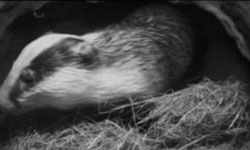
This fascinating programme takes you deep into the secret world of the badger, following one family throughout the course of a year. Explore the habits, behavior and survival techniques of one of our country's most shy and elusive creatures.
- TV-Recordings
- Biology
- TV-Recordings
- No subtitles
- 50
This fascinating programme takes you deep into the secret world of the badger, following one family throughout the course of a year. Explore the habits, behavior and survival techniques of one of our country's most shy and elusive creatures.